
Creative Profile. The Living Room Theatre (LRT)
In this conversation with arts advocate Tamara Winikoff, The Living Room Theatre’s Artistic Director Michelle St Anne reflects on a year of profound transition — for both herself and the organisation she founded. As she steps down from her role as Chair of the Inner West Creative Network to deepen her artistic work and steward a new era for LRT, the company is celebrating a milestone 25 years in the making: securing its first permanent home at 21 Shepherd Street, Marrickville.
For a quarter of a century, The Living Room Theatre has created its works in borrowed, makeshift, and abandoned spaces — from warehouses and office blocks to hidden corners of the city marked by memory, rupture, and resilience. Now, for the first time, it has a place to settle. More than a venue, 21 Shepherd Street is a rehearsal ground for risk-taking and artistic curiosity: not a black box, but a home — a site of trust, intimacy, and transformation.
What inspired the establishment of LRT?
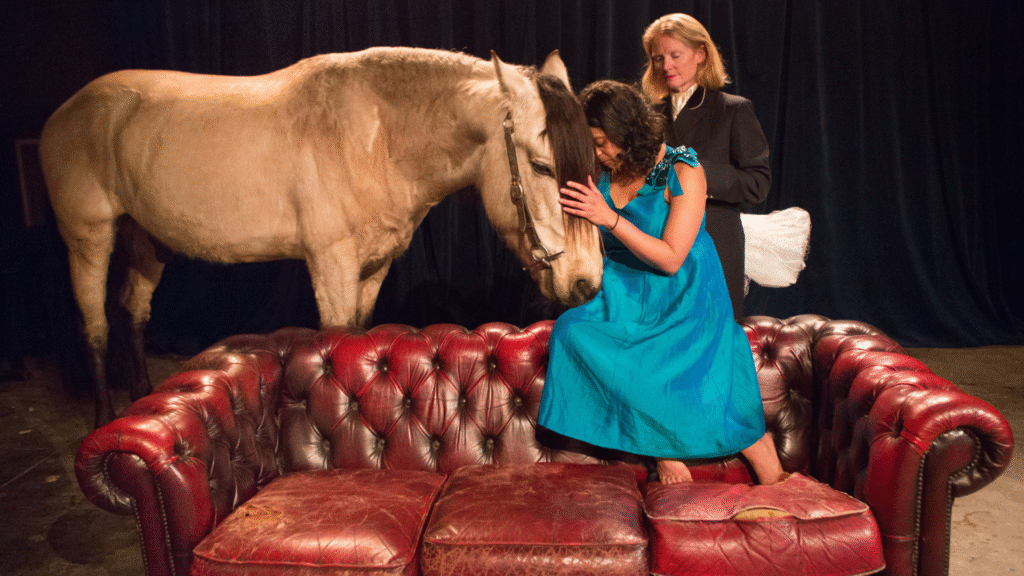
The Living Room Theatre was born out of dissatisfaction with the prevailing scene. Back in 2000, after graduating from drama school and working as a performer, I was exhausted by being typecast as “the Indian.” Growing up in a first-generation migrant family, assimilation was everything. We just wanted to fit in. But the arts resisted that, and I can see that tide returning now. LRT became a home for my artistic voice, a place where stories go beyond skin colour and speak to humanness, and more deeply, to femaleness. The histories of migration, otherness, and longing are embedded in my practice; always the outsider looking in, with curiosity, compassion, and a hint of humour.
What has been your role, Michelle?
I am the founder and artistic director of LRT. Over 25 years, my role has encompassed everything from developing and directing works, mentoring artists, and producing performances to creating partnerships and advocating for independent theatre.
What have been the high points over its 25-year history?
For LRT, the high points aren’t about awards or headlines. It’s been about creating a space and a place for artists to develop their voices and tell stories in different ways. It’s about still making work despite never receiving funding from Create NSW or Creative Australia, and creating our own home to ensure independent artists have a home.
For me personally, learning. Any moment that keeps me curious, whether it’s an aesthetic discovery or an unexpected opportunity. I tend not to isolate a single highlight. Instead, it’s like a snowball of experiences that keep me returning to the floor with empathy.
LRT claims to have created performances that “transform the ordinary into sites of revelation.” Can you explain how and give us some examples?
Having grown up in what I describe as a domestic warzone, I learned early how to be still, to not make a sound, to read a room through vibration and silence. Those heightened and numbed senses shaped how I perceive space. I notice the flow of light, the smell, the echoes. These perceptions allow me to draw revelation from the seemingly ordinary because my memories awaken those senses.
In creating a permanent location, won’t LRT lose the dynamism of responding to different places and communities?
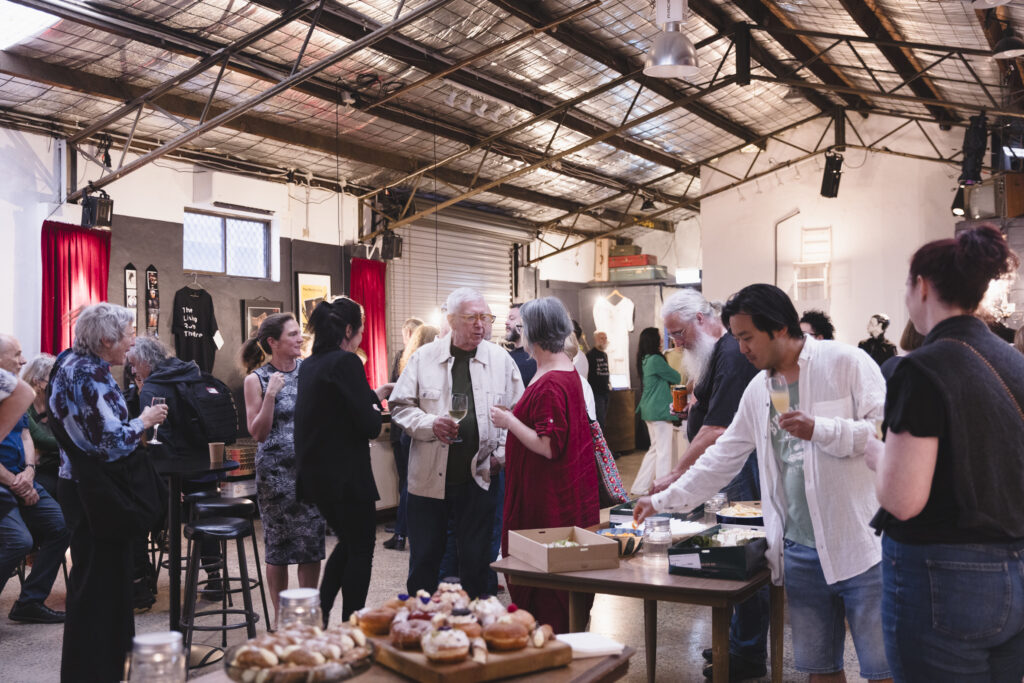
Yes and no. A permanent space is about sustainability and resilience. It’s a response to the lack of funding and to planning laws that curtail independent theatre; a way to make work that doesn’t rely on major event teams or marketing departments.
Our venue is beyond the black box. It’s flexible, responsive, and ever-changing. Like all spaces, it shifts with the seasons and with the people who inhabit it. I’ll always respond to space; that’s at the core of my practice. The human experience is one body in a myriad of situations each carrying a narrative beyond the ordinary, beyond the perceived. It’s this palette that fuels the non-linear and the multi-sensory, the work that leaks from us and from our fever dreams, rather than the neat packaging of beginnings, middles, and ends. For me, every image has a sound. Where sound comes from, how light flows, and how movement is framed by architecture, these elements interact to create a felt experience rather than a solely intellectual one, leaving space for personal co-authoring and emotional resonance.
What will be the selection criteria for deciding who can use the space?
We will prioritise artists and micro-organisations whose work aligns with our values: curiosity, risk-taking, generosity, and experimentation. We are particularly interested in projects that explore the multi-sensory, non-linear, and interdisciplinary, or that engage with difficult social or emotional subjects. The space will be a home for development, rehearsal, and presentation, for artists committed to deep engagement and exploration rather than purely commercial aims.
How do you measure your impact?
I don’t. Art is an expression, not something to be measured by a healthy balanced scorecard. It’s about seeing the world and finding ways to live in it.
As cultural scholar Justin O’Connor writes:
“Today, culture finds itself in the grip of accountancy firms, creative gurus, and TED Talkers. But artists and their endeavours are bold and uncompromising. Art is not an industry — it’s an essential part of a functioning society.”
— Professor Justin O’Connor, University of South Australia
I don’t see artistic endeavour as more valuable than entertainment; the two coexist, and neither should discount the other. That’s where I think current arts policy fails. It measures art against an economic model, when the humanities exist beyond that logic.
What do you hope the new space will enable that hasn’t been previously possible?
It will enable germination, cross-pollination, collaboration, nurturing, and a renewed sense of self-worth for artists at the fringes of the ecosystem. Each artist who enters will bring their own curiosities, their own questions. The venue will allow us to be found.
While we will continue performing in hurt and abandoned places, this new home will give us a dedicated base for our artistic and research activities; a place of continuity and belonging.
What a studio is to a painter, our home will be to our performative research. Just as a painter’s brushes, paints, and canvases remain in place, ready for the next stroke, this space will hold our materials, our instruments, and our ideas in waiting, allowing the work to remain alive between rehearsals, suspended in motion, shifting and evolving until it is complete.
21 Shepherd will be more than just a venue. It will be a research centre, an incubator for LRT’s work, and a creative hub for like-minded, multidisciplinary artists. By securing a permanent home, The Living Room Theatre will deepen its place within the sector offering stability without stagnation, and permanence without limitation. The artistic process will remain dynamic, immersive, and unrestricted; a living conversation between artistic courage, curiosity, and care.
Article by Tamara Winikoff
Tamara Winikoff is an independent consultant with extensive experience in arts advocacy, policy, and cultural leadership. She was a founding member of the Inner West Creative Network and has served as Executive Director of the National Association for the Visual Arts (NAVA) for 22 years, championing artists' rights and sector development.