
Creative Profile: TILIQUA TILIQUA
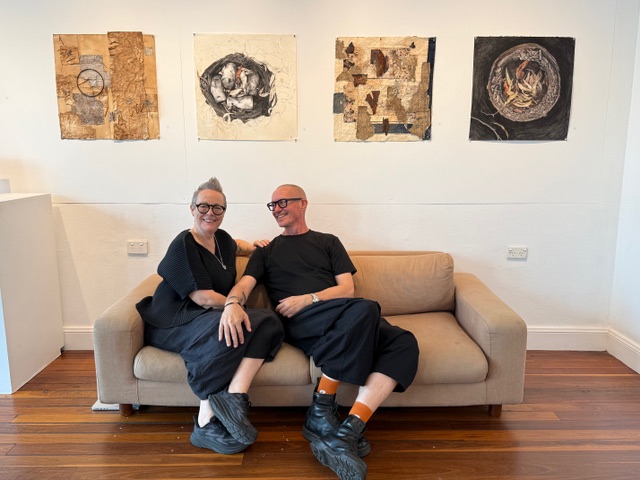
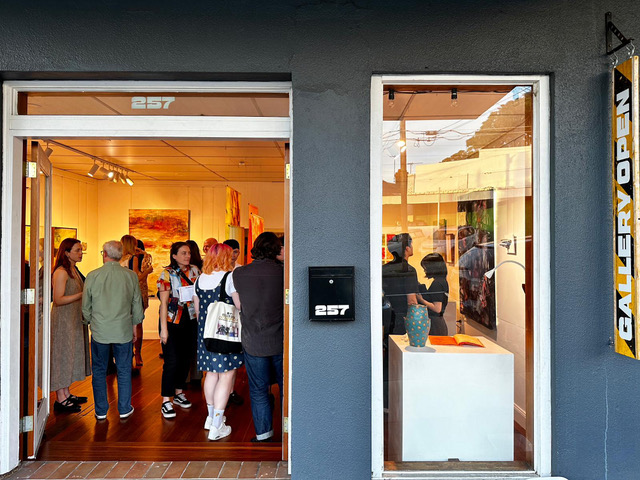
Tiliqua Tiliqua is a combined art-making and printing space located at 257 Enmore Rd, Enmore. It is available to hire for exhibitions, events, workshops and more. The gallery is usually open Thursday to Sunday while an exhibition is on, or at other times by arrangement. The studio began in 2010 in Hutchinson St, St Peters as an art-making space and co-work design studio. The studio moved to its current location in Enmore in early 2022 where the gallery space was opened. It is the permanent creative home of Felix Oppen and Kate Riley who say they are more than happy to share the space, and their two presses (one etching press and one letterpress) with others.
Finding and managing a space like yours is a big responsibility. Why did you make the decision to do this?
Ironically, we never intended to set up an exhibition space. We had had a studio in St Peters for a decade but had to move at the tail end of the COVID lockdowns. We wanted a place that was walking distance from home and there was very little available, mostly soulless industrial units. Then we found the place on Enmore Road, which had the perfect studio space out the back. But it also came with a shop front. We wanted that studio space, so we looked at each other and said, ‘hey, maybe we can also open an exhibition space?’. We had zero experience in running a gallery, so we have been making it up as we go along ever since.
Exhibition spaces are always in high demand. What selection criteria do you have for exhibitors?
We have been running our current configuration for less than four years and we are only now getting to a stage where we need to be really selective. That said, some key things are important to us:
- relationship – can we work with the artist(s)?;
- professionalism – we aim provide the most professional support to artists that we can;
- does the artist share our attitude toward craft – do they have the skill and ideas to make engaging work?
While we ourselves have our preferred media, we are keen to exhibit work from the full spectrum of artistic endeavour within the limitations of the space we have.
You offer your specialist equipment for hire which brings in income but can also bring problems with it. What do you do to protect it?
Honestly, we haven’t encountered any problems yet (touching wood!!). For several reasons, we suppose. Firstly, we offer only limited technical support, so we require users to demonstrate good technical ability on the press before they start. We try to be always in the studio when the presses are being used and make it clear that we are always ready to answer questions when needed. We work on the belief that establishing friendly, respectful relationships with the people who hire the space means they will respect that space in return. Finally, as far as we know we are one of two places in the inner west that offer presses for hire, so maybe folk are wary of pissing us off!
What different sorts of creators use the etching press and the letterpress?
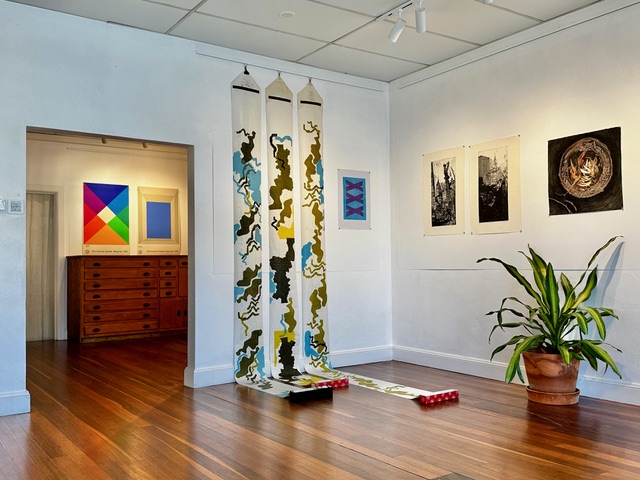
Because we require proven experience on the press we tend to get creators whose primary focus, and background, is in printmaking. Most are relief printers (lino and wood block), probably due to the low technological requirements for the plate prep for those techniques. But artists experimenting with different and very idiosyncratic methods come in as well; working with monoprint, or origami printing for example. We’ve had established artists working towards an exhibition, masters students putting together their folios, people producing work for markets, and people discovering their passion for a new creative endeavour. Basically, if you can demonstrate that what you want to do and won’t damage the press, we will work with you.
Do some artists use the presses to make artists books? If so please describe how?
Although the letter press is an ideal tool for creating artists books we haven’t had anyone use it for this yet!
But we have seen books being created on the etching press. In the end, it isn’t really that different a creative process to any other taking place on the press bed. The same problems are being solved: how do I get the image from the plate to the paper (or other support material? how can I combine plates and techniques to get the result I want? The printing press was designed and engineered to allow the creation of multiples, of editions, so it remains the ideal place to create artist books.
Do you have advice for others who might want to follow your example in running a community accessible space?
In setting up the exhibition space, we started with the question, ‘what sort of a space would we want to show our work in?’ We didn’t mean a physical space so much, but rather what sort of services and support would we want as artists?
We have proved that you don’t need past experience to do this, so be bold, but remain honest about your abilities.
Definitely don’t assume that you can just get a grant. By all means apply, but it could take many applications and years to get one.
Be aware that it is a lot of work, and the financial rewards are not great. Very few, if any, exhibition spaces are genuinely profitable, certainly not in the early years. But there are more rewards than just financial ones. The creative community is a joy to be part of. And we have found creative outlets in the gallery that we had not expected at all, such as in curatorship and design of exhibitions.
Take the view that success by whatever measure, won’t be immediate. Plan for a five year time frame - if success comes earlier than that, props to you – and schedule changes and improvements accordingly. You don’t need to get it right from day one.
Be adaptable.
Make use of organisations such as the IWCN.
Set your boundaries and stick to them and don’t be a dick.